


Patient retention problems rarely start with a dramatic failure. More often, they begin with small gaps that pile up, a refill reminder that never goes out, a lab follow-up that lives in someone's memory, or a cold lead that disappears because nobody owned the next step. For TRT clinics, those gaps cost revenue, reduce adherence, and create a patient experience that feels far less consistent than the care team intends.
Patient engagement software matters because it gives those follow-ups a real system. Instead of treating communication like a side task, your clinic can turn it into a repeatable operating layer that supports retention from first inquiry through long-term care.
Retention problems usually look like communication problems first
Most clinics notice churn after the fact. A patient misses a consult, falls behind on labs, stops refilling, or quietly disengages after an insurance or payment hiccup. By the time someone looks at a report, the damage is already done.
That is why retention is not just a customer service issue. It is an operations issue. If your staff is manually piecing together calls, texts, task reminders, calendar follow-ups, and refill checks across disconnected systems, consistency disappears fast. We covered that broader systems issue in what actually breaks when clinic tools are disconnected, but retention is where that fragmentation becomes painfully visible.
Patient engagement software helps by creating a predictable cadence. The point is not to flood patients with messages. The point is to make sure the right person receives the right nudge at the right point in the journey, every time.
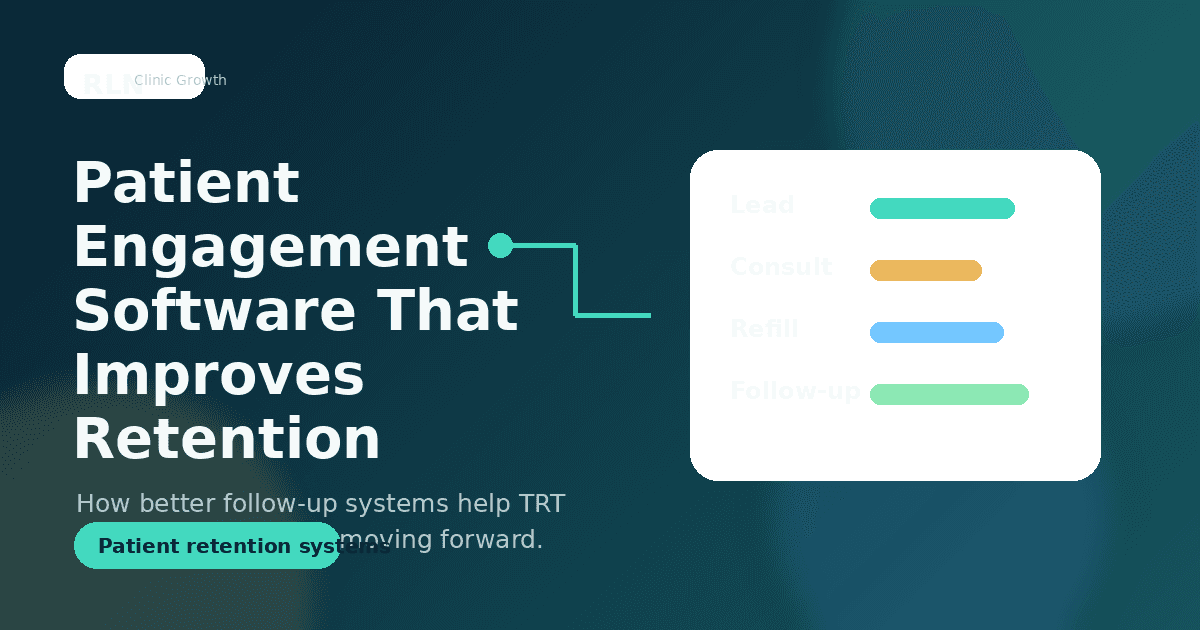
Good engagement software gives each stage of the patient journey a job
Retention improves when follow-up stops being generic. A new lead needs a different sequence than a patient waiting on lab review. A patient who missed an appointment needs a different message than someone whose refill window is approaching. Strong engagement systems let your clinic define those stages clearly, then attach the right communication and task logic to each one.
That structure is one reason patient journey automation works so well in practice. If you want a deeper look at that framework, these five patient journey automations show how clinics can reduce drop-off before it turns into lost revenue.
When the system is built correctly, staff no longer have to remember every next step on their own. The platform can trigger reminders before consults, surface incomplete intake steps, prompt internal follow-up after missed appointments, and keep long-term patients from going quiet between milestones.
Retention gets stronger when education is part of the workflow
Many clinics think of engagement as appointment reminders plus refill notifications. That is only part of the picture. Patients stay engaged when they understand what is happening, why it matters, and what to expect next. Education lowers anxiety, reduces confusion, and gives patients more confidence in sticking with treatment.
This is especially true in TRT, where adherence depends on consistent follow-through over time. Messaging that explains lab timing, refill expectations, next-step decisions, or what a patient should prepare for before a consult can keep people moving forward instead of stalling out. That is why educational retention content tends to work better than bare-bones reminder blasts.
Patient engagement software makes that educational layer easier to maintain. Instead of writing one-off explanations every week, your clinic can build reusable workflows around common points of confusion. The result is a patient experience that feels more responsive, even when the process itself is highly structured.
Visibility matters just as much as automation
Automation is helpful, but only if your team can see what is happening. One of the biggest retention problems in growing clinics is not the absence of outreach. It is the absence of visibility. Staff assume a follow-up happened, assume a patient received the message, or assume someone else owns the next action.
Strong patient engagement software gives your team a shared view of status, activity, and exceptions. You can see who has not responded, who missed a milestone, which patients are at risk of slipping, and where the workflow itself may need work. That kind of visibility is part of why refill management is so important. In fact, refill visibility alone can reduce patient drop-off when clinics stop treating it like a separate administrative chore.
With clearer visibility, your team spends less time guessing and more time intervening where it actually counts.
Re-engagement should be designed before you need it
No clinic retains every patient perfectly. Some leads go cold. Some patients disappear after an initial step. Some active patients drift when life gets busy, motivation drops, or a billing issue creates friction. The question is whether your clinic has a re-engagement path ready before that happens.
Without one, staff usually improvise. They send a quick text, make a call when they have time, or leave the contact untouched because the day got away from them. That approach produces uneven results and usually favors the loudest fires over the most valuable recoveries.
Patient engagement software lets your clinic define recovery workflows in advance. You can create segmented re-engagement paths for missed consults, incomplete onboarding, refill lapses, or dormant patients who were previously active. That planning is far more effective than waiting until churn shows up in a spreadsheet. We saw the same pattern in dedicated re-engagement workflows for cold leads, and the logic applies just as strongly to retention after the first appointment.
The real goal is a calmer clinic and a steadier patient base
Patient engagement software is not valuable because it sends more messages. It is valuable because it removes randomness from follow-up. That means fewer missed steps, fewer preventable drop-offs, and fewer moments where staff has to hold the entire patient journey together by memory.
For TRT clinics, retention is shaped by consistency. Patients stay connected when communication feels timely, relevant, and clear across intake, consults, labs, refills, and long-term follow-up. The clinics that do this well are not necessarily working harder. They have simply built a system that keeps the relationship active without relying on constant manual effort.
If you are looking at retention problems and wondering where the friction really starts, it may be worth stepping back and reviewing whether your patient communication flow is actually built to support long-term care. A platform that handles that work cleanly can change more than just show rates, it can change how stable the entire clinic feels.